
Tree trunk removal has become an essential part of modern property maintenance — especially for homeowners who want a safer, cleaner, and more usable outdoor space. Whether it’s a leftover stump from a cut tree, a decaying trunk near your house, or roots spreading and damaging the landscape, removing a trunk is no longer just about aesthetics — it’s about safety, hygiene, and reclaiming your yard.
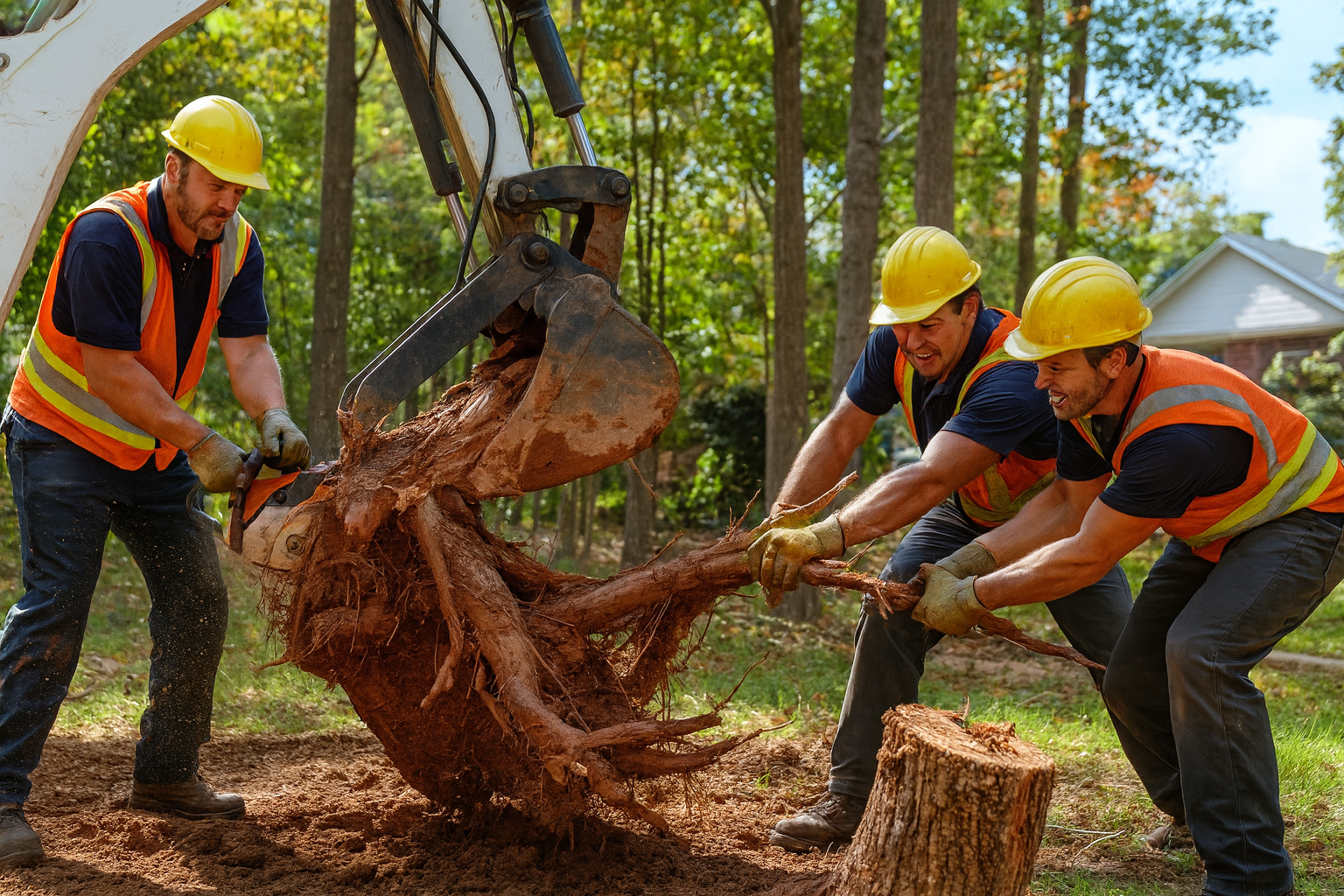
The image above perfectly represents the real-world effort involved: skilled workers, powerful machinery, strong coordination, and a lot of precision. Tree trunk removal is a heavy-duty process, but when done right, it transforms your outdoor environment completely.
Understanding Tree Trunk Removal
Tree trunk removal is more than pulling out a stump. It involves a complete approach that includes:
-
Cutting and loosening the root system
-
Removing soil-packed roots
-
Grinding or digging out the stump
-
Ensuring no roots spread toward foundations or pipelines
-
Restoring the ground for safe future use
Most tree trunk removals involve dealing with:
-
Deep, tangled root systems
-
Hardened soil
-
Moisture pockets
-
Termite activity
-
Fungal growth
-
Heavy stump weight
A proper removal ensures the stump doesn’t rot, attract pests, or cause accidents later.
Why Tree Trunk Removal Matters
Removing an old tree trunk is crucial for many reasons:
1. Eliminates Safety Hazards
Leftover trunks create risks like:
-
People tripping
-
Machinery getting stuck
-
Roots damaging underground pipes
-
Termites spreading toward the house
-
Fungal growth due to decay
A clean removal prevents long-term threats.
2. Prevents Pest Infestation
Old trunks attract:
-
Termites
-
Ants
-
Beetles
-
Wood-boring insects
These pests can eventually reach fences, furniture, or even your home.
3. Improves Soil Health
Decaying trunks affect soil quality. Removing the stump allows:
-
Better nutrient flow
-
Safer landscaping
-
Healthy plant growth
4. Restores Useable Land
Once the trunk is removed, your yard instantly gains more:
-
Gardening space
-
Lawn area
-
Safe outdoor activity zone
-
Construction or installation options (patio, walkway, shed)
5. Enhances Property Aesthetics
A yard with leftover stumps looks neglected. A cleared landscape always feels fresher and more organized.
Planning Your Tree Trunk Removal
Good preparation ensures a smoother, safer job.
1. Choose the Right Time
Pick a time when:
-
The ground is dry
-
The weather is clear
-
Workers have enough space to operate machinery
Damp soil makes removal harder and riskier.
2. Prepare the Area
Clear the surroundings:
-
Move vehicles, pots, or furniture
-
Create space for machinery
-
Ensure no children or pets are nearby
3. Inspect the Root Direction
Before removal, professionals check:
-
How far roots have spread
-
Whether roots touch water pipes
-
Whether the stump is decayed or solid
-
Soil depth around the trunk
This prevents surprises during extraction.
Step-by-Step Tree Trunk Removal Strategy
1. Expose the Stump & Root System
Workers remove soil around the trunk to uncover:
-
Main roots
-
Side roots
-
Root knots
This step reduces resistance during extraction.
2. Cut Through Major Roots
Using chainsaws, axes, or root-cutting tools, the thick roots are cut to weaken the stump’s grip.
3. Use Machinery for Extraction
As shown in the image, a backhoe or excavator:
-
Grabs the trunk
-
Lifts and twists it
-
Pulls out the root system
Manual force often supports the machine to remove stubborn roots.
4. Remove Remaining Soil & Debris
After extraction, workers:
-
Clear leftover roots
-
Flatten the ground
-
Remove wood chips & soil chunks
5. Treat the Ground (If Needed)
Depending on the stump, professionals may apply:
-
Anti-termite treatment
-
Fungus remover
-
Soil fresheners
This ensures the ground stays pest-free.
6. Refill & Level the Area
Finally, the space is filled with:
-
Fresh soil
-
Sand
-
Compost (optional)
Your yard becomes safe and usable again.
Common Mistakes People Make
Avoid these to prevent long-term issues:
-
Leaving small roots behind → they regrow or attract pests
-
Burning the stump → unsafe & illegal in many places
-
Using chemical stump removers improperly → environmental damage
-
Not checking underground utilities → risk to pipelines or cables
Professional removal ensures safe handling of all these risks.
Best Practices for Long-Lasting Results
To maintain a safe yard:
-
Inspect tree roots yearly
-
Remove dead trees before they fall
-
Treat soil for pests after removal
-
Avoid planting large-root trees too close to structures
-
Refill the stump area properly to prevent soil sinking
Types of Tree Trunk Removal
1. Manual Removal
Suitable for small stumps or softwood.
2. Mechanical Removal
Involves excavators, grinders, or backhoes (as seen in the image).
3. Stump Grinding
Grinds the trunk into wood chips — ideal for landscaped lawns.
4. Full Extraction
Removes stump + entire root system — best for construction areas.
The Psychology of a Clean Yard
Just like decluttering indoors, clearing an old stump outdoors creates:
-
A sense of order
-
More usable space
-
A cleaner environment
-
Peace of mind
A stump-free yard looks maintained, intentional, and healthy.
Real-Life Tree Trunk Removal Transformation
A client had:
-
A huge decaying trunk
-
Deep roots damaging paving
-
Termites spreading
-
Unsafe play area for kids
What our team did:
-
Cut and loosened roots
-
Used a backhoe for extraction
-
Treated the soil
-
Leveled the ground
Result:
A clean, clear yard — safer, fresher, and ready for new landscaping.
The homeowner said:
“Removing the trunk completely changed the look of our yard. It finally feels spacious and safe.”
Conclusion
Tree trunk removal is more than clearing wood — it’s about restoring safety, health, and beauty to your outdoor space.
With professional services, you get:
-
Safe extraction
-
Root removal
-
Soil treatment
-
Ground leveling
-
Long-term pest protection
Your yard becomes cleaner, safer, and ready for whatever you want to build or grow next.


0 Comments